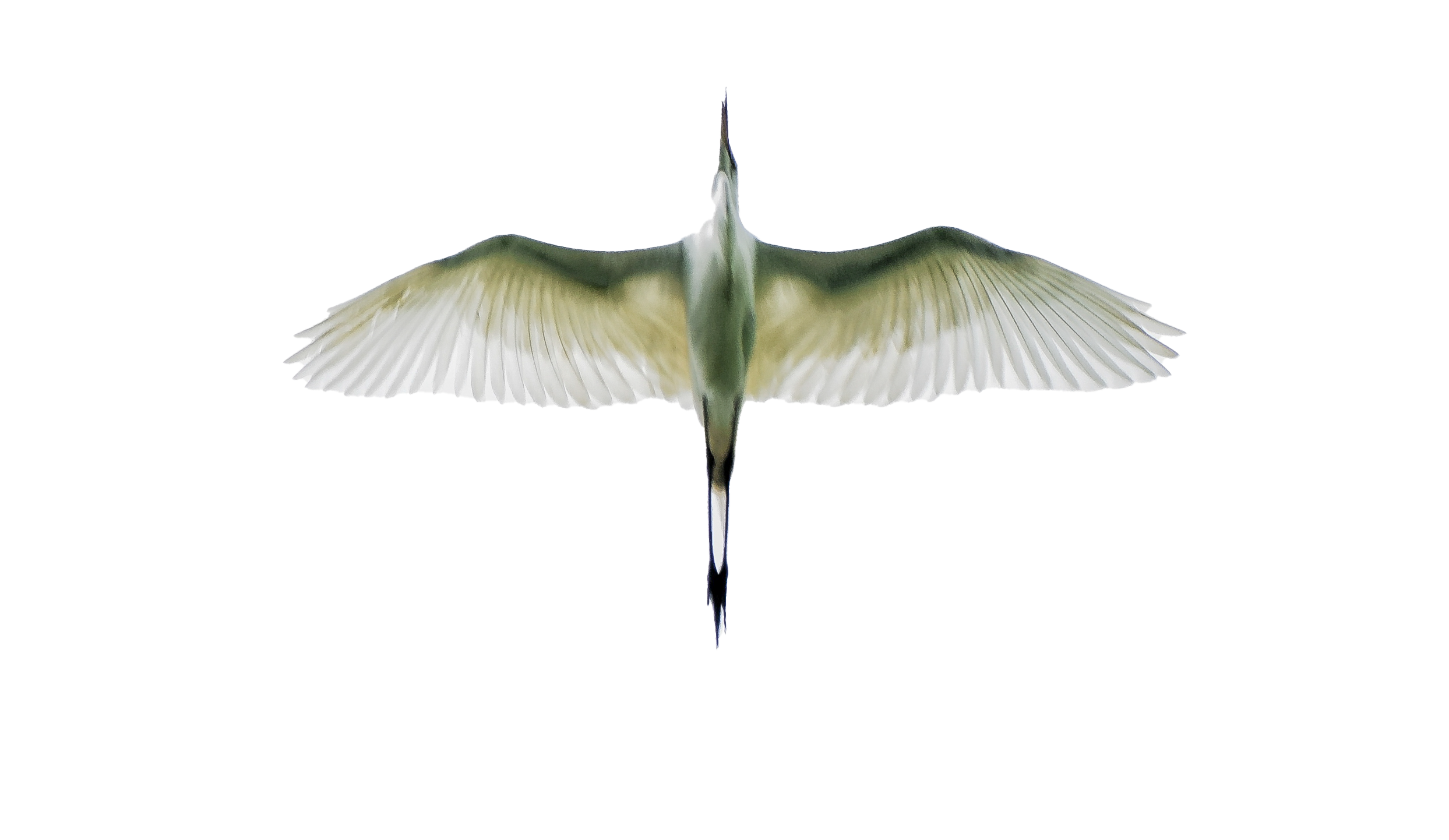
It began by leaving behind everything that was given.
Not as rebellion,
but as a need to see what would remain
when nothing was left to hold.
There are journeys that are planned.
And then there are those that begin without permission.
This was not travel.
Not documentation.
It was the first moment
my body, mind, and camera
felt like the same thing.
The body no longer felt owned.
It began to feel like terrain.
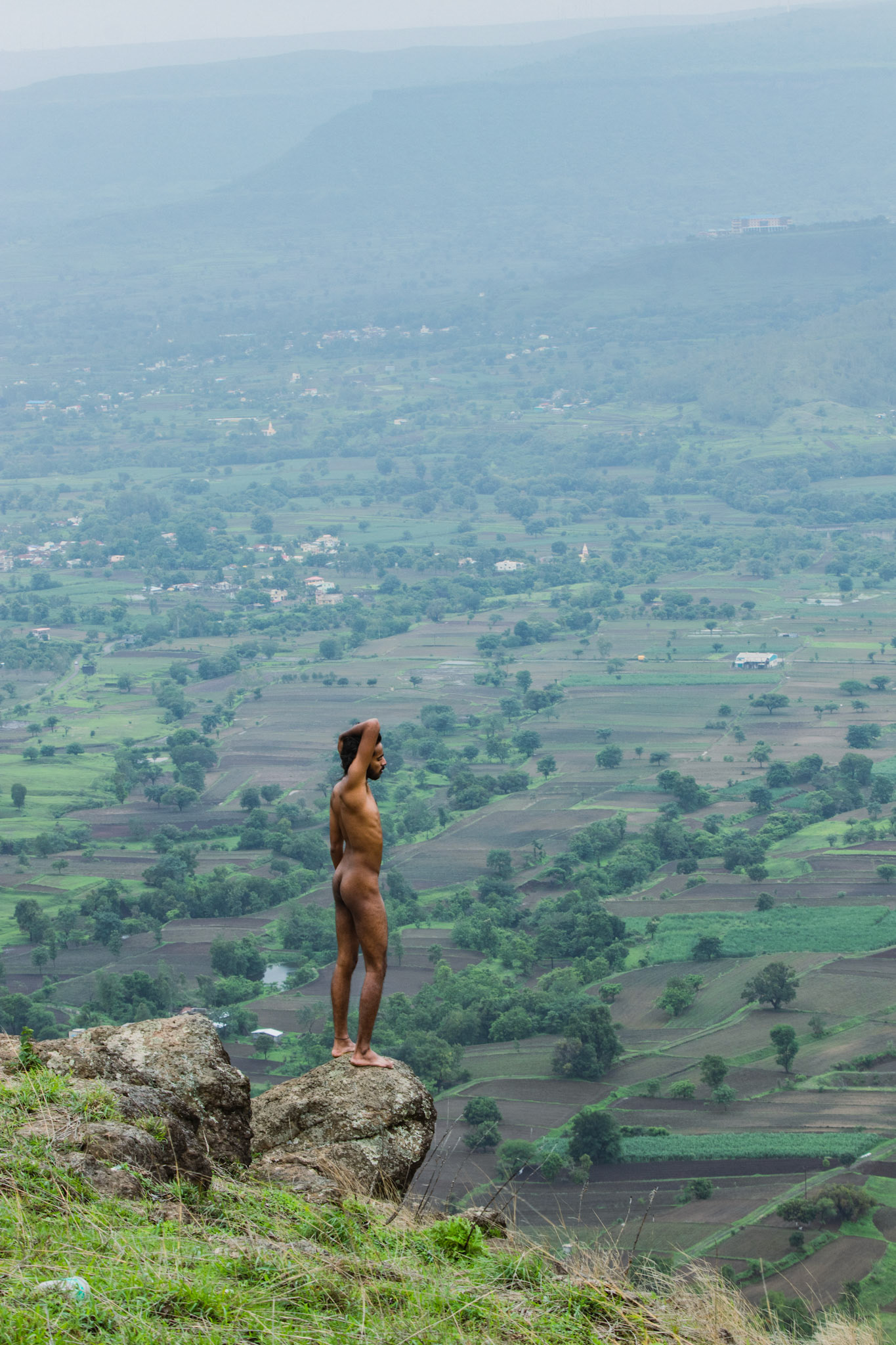
First Nude Photo of Mali
It began in my third year of college.
The earlier years had already boxed me in,
wildlife photographer in the first,
fashion photographer in the second.
I was moving fast.
But everything I made felt external.
That year, something shifted.
I started walking into a different world,
raw, unscripted, unfiltered.
I pierced my septum.
Clothing changed.
Presence changed.
My rebellion turned physical.
At home, resistance surfaced.
That single piercing stirred chaos.
Silence, confusion & Arguments
something small on the body
had suddenly become bigger than the body itself.
But I knew it was already too late.
Something bigger had entered me.
The Door That Never Closed: Studio 5
I had already decided to choose fashion as my specialisation.
Then a classmate whispered:
“The fine art professor you asked about is waiting in Studio 5.”
I went only to tell him I wasn’t joining.
Abhishek Sharma, fresh from New York, was locking the door when I arrived.
He saw me.
Paused.
And opened it again.
That door, once opened, never closed again.
Inside, I sat in front of him.
I had just pierced my septum.
Long hair. Ripped denim.
A body already trying to become something else.
I tried to explain what I wanted to do.
Something about shooting reality.
Something about people.
Something about body positivity.
The words did not exist yet.
I was speaking without language.
He listened.
Then turned on the projector
and showed me the work of Ryan McGinley.
Something broke open.
A body in nature,
not performing, not hiding.
Not provoking.
Not explaining.
Just existing.
He asked me to make a presentation.
I finished it the same night.
But I was not thinking about the presentation.
I was thinking:
When do I begin?
Evin was the only classmate who understood the fire in my head.
There was no concept.
No theory.
Only the need to begin.
We decided to shoot.
On the way out of Pune,
we crossed my father.
I was unrecognisable,
long hair, Shades, jewellery.
Evin beside me, full hippie mode.
A body already shifting away
from what he knew.
He asked:
“What are you doing here?”
I said:
“Going for a shoot.”
He didn’t ask anything else.
But that silence stayed longer than words.
He drove away.
And so did we.
That moment was a checkpoint.
A crossing.
From the boy they knew
to the artist I was becoming.
After the first nude shoot,
I showed the images to Abhishek Sharma.
He looked at them and said:
“The body is still not free.”
It was a simple sentence.
I didn’t fully understand it then.
The body was already exposed.
I thought that was enough.
As we were leaving,
he said it again, differently.
Half joking. Half serious.
“Give it some time… be free… Put something on your tongue
then shoot.”
He knew how we lived.
The looseness, the chaos, the in-between states.
He wasn’t suggesting anything literally.
He was pointing at something deeper,
the body still carried control.
It was visible,
but not yet comfortable.
Present,
but still aware of being seen.
And the truth was,
there were other images from that same trip.
More raw.
More carefree.
But I didn’t show those.
They felt too real.
Later, I did.
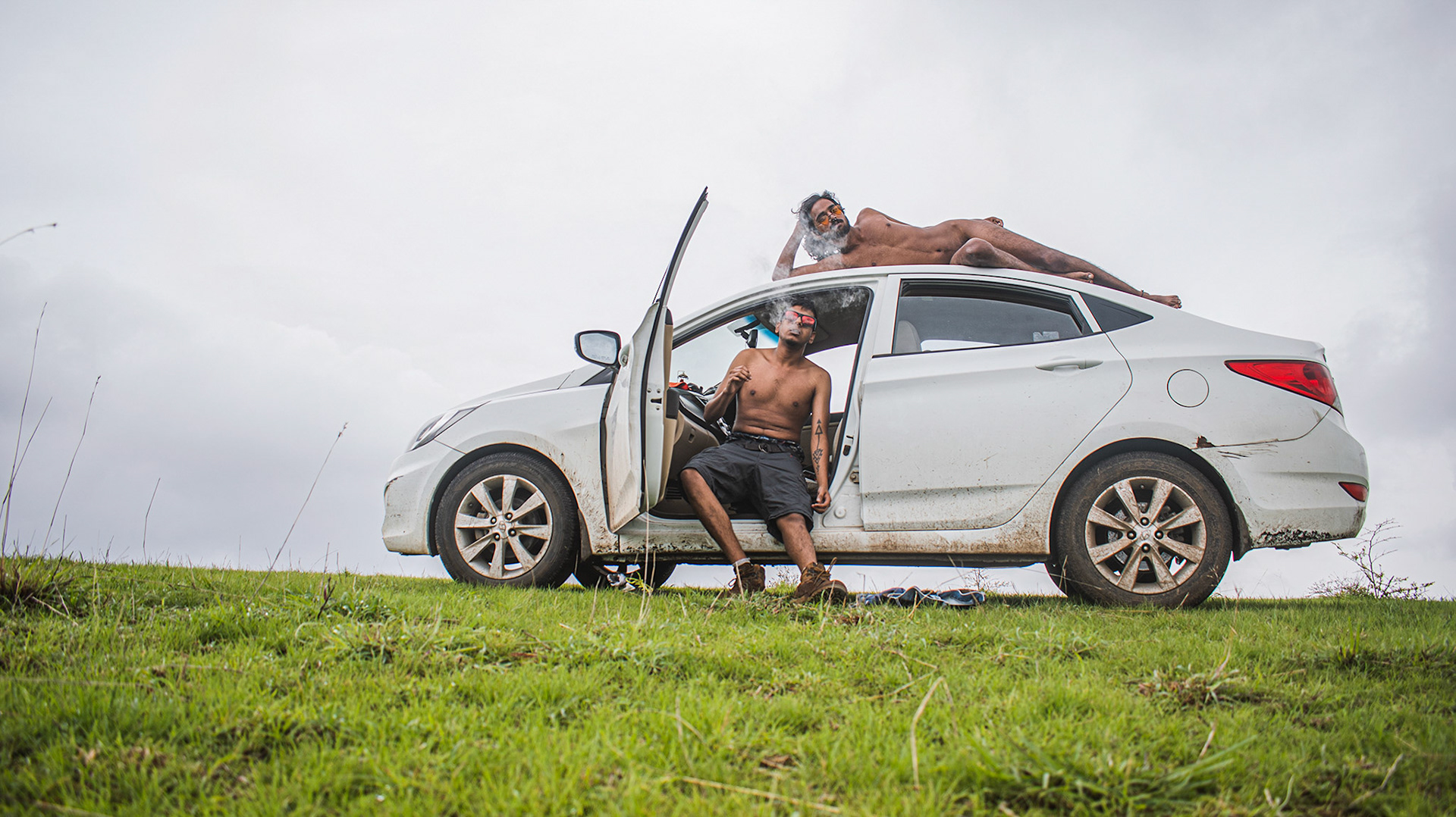
The shoot was raw and real.
The next day, the first nude photograph went online.
And everything shifted.
Friends became quiet.
At home, nobody knew how to react.
At home, nobody knew how to react.
My sister switched off her phone
and kept it under the pillow.
and kept it under the pillow.
No one asked questions directly.
Then my mother broke down.
She cried as if someone had died.
I still remember her lying on the floor near the washroom,
unable to hold herself together.
unable to hold herself together.
The house had turned into grief.
And I walked out.
I didn’t have the language
to explain what I was doing.
to explain what I was doing.
Only the feeling.
Only the certainty
that I could not go back.
that I could not go back.
For the first time,
I was not performing for the world.
I was not performing for the world.
I was standing with myself.
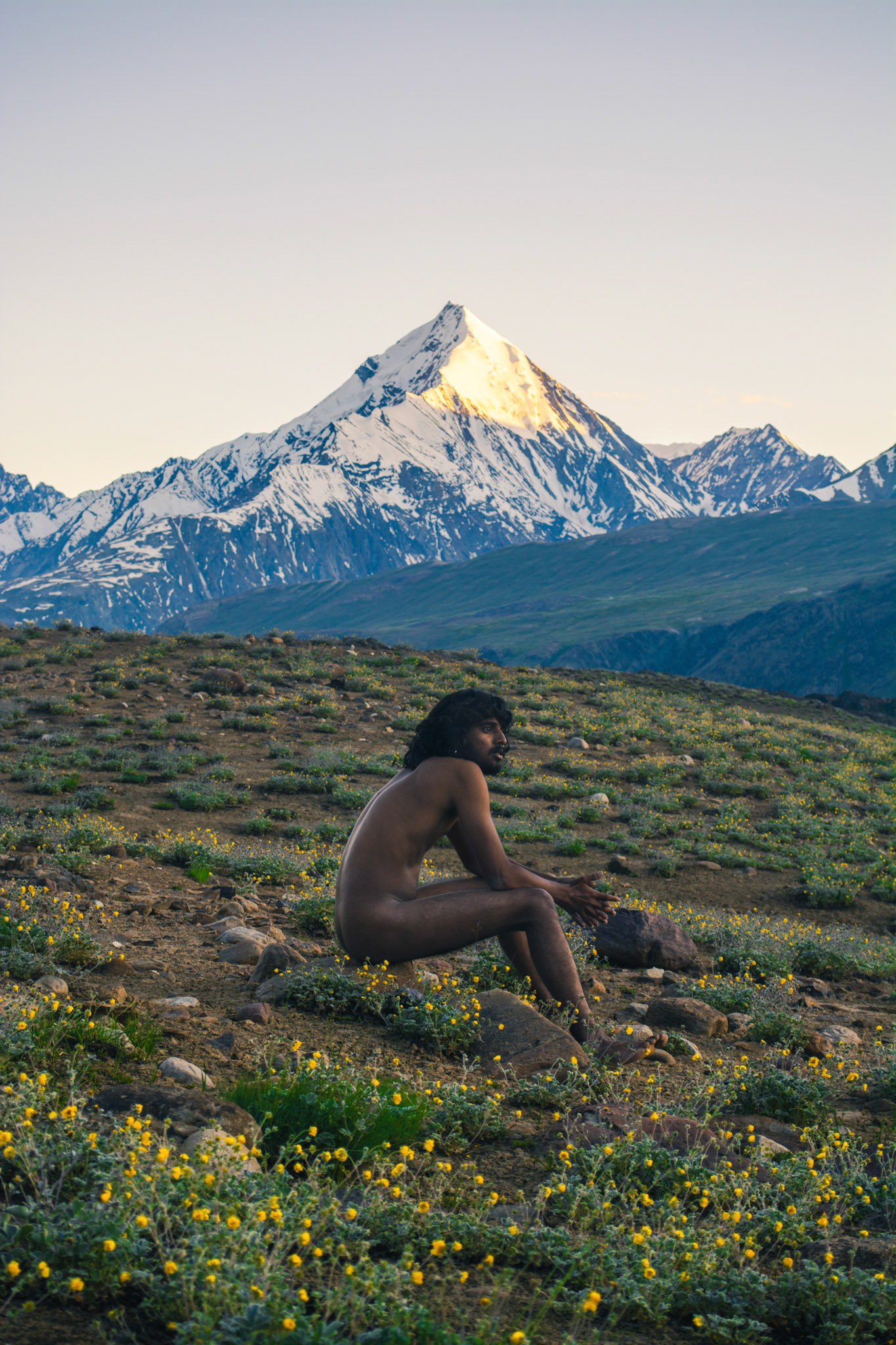
Later, in Spiti on a college tour, everyone wore four layers.
In the high cold regions,
the body is reduced to function.
Breath shortens.
Movement slows.
One student blacked out
and had to be driven through the deadliest road to Shimla.
Survival becomes the only language.
Everyone remained covered.
And me,
I was undressing.
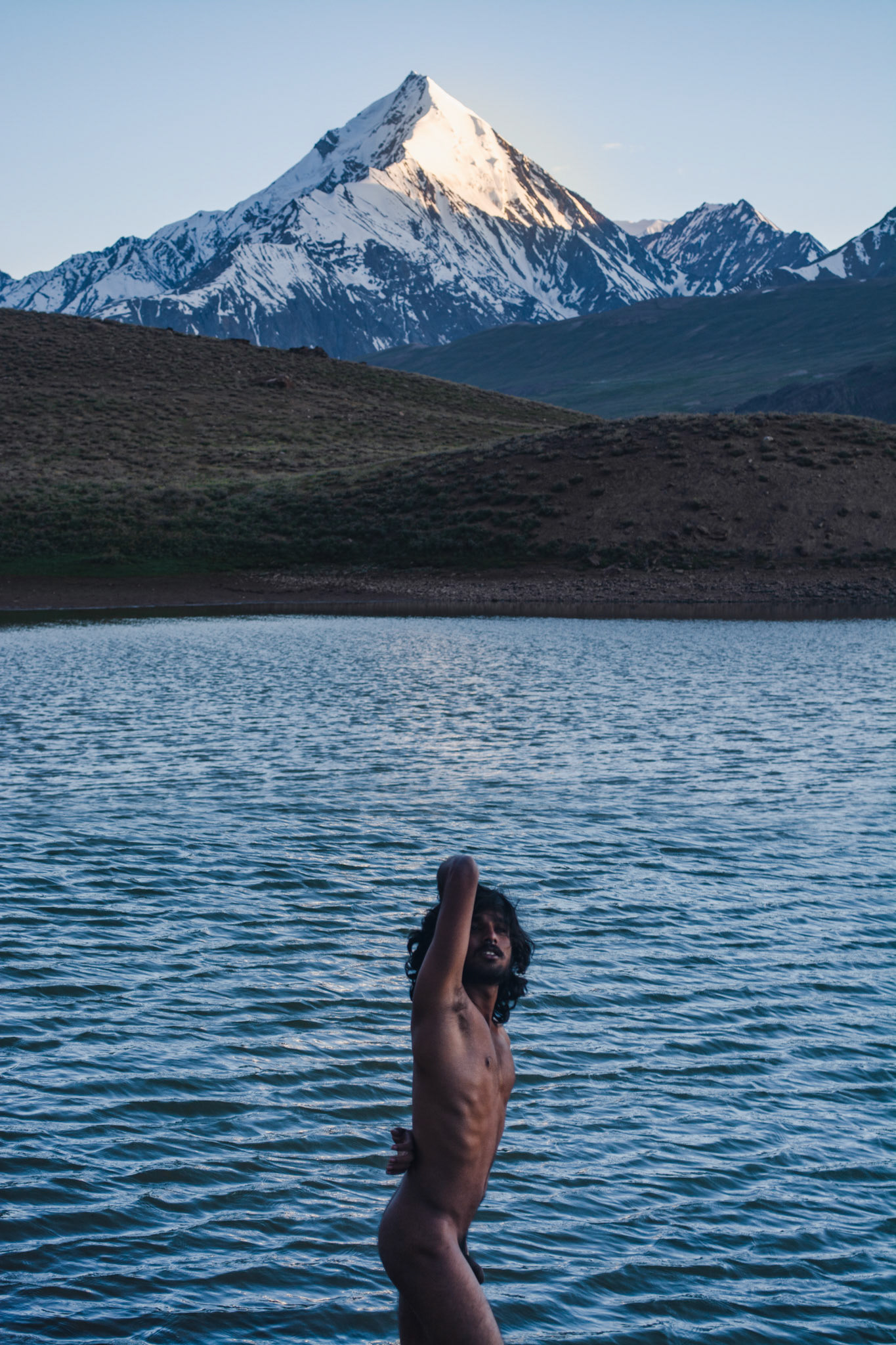
By Chandratal Lake, I stripped down.
Not as statement.
Not as performance.
But to observe
what the body does
when nothing protects it.
At first, it resisted.
Then it adapted.
Then something disappeared.
The cold remained,
but it no longer belonged to me.
Separation began to dissolve.
After this, returning did not feel natural.
The body had changed.
But the world had not.
Spaces that once felt familiar
began to feel constructed.
Conversations felt distant.
And something in me
stopped trying to fit back.
I no longer reacted in the same way.
I remained.
Without resistance.
A return to the previous state
was no longer possible.
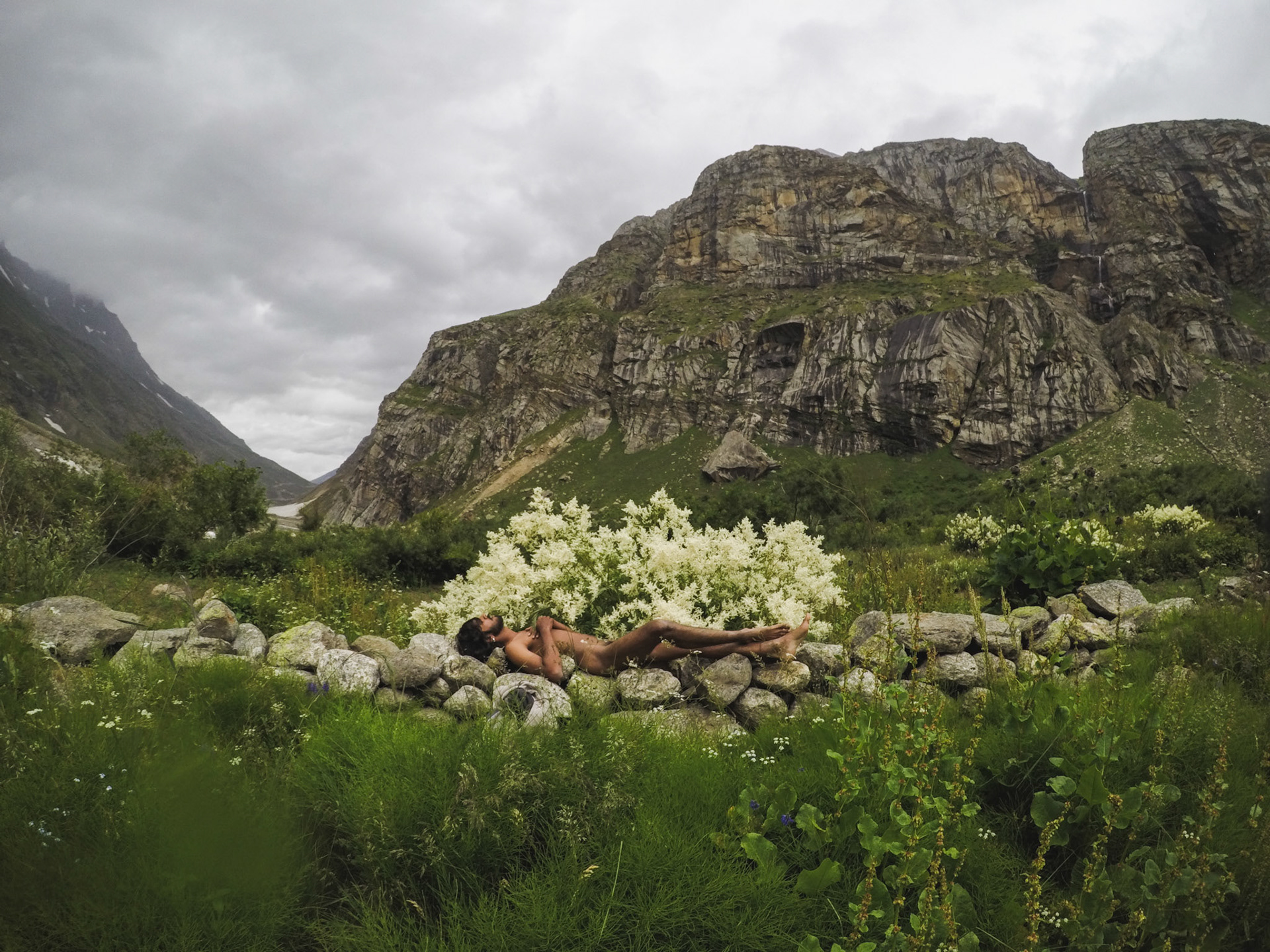
On the way back, the journey broke.
A punctured tyre.
A forced stop.
Everyone stayed with the vehicle.
I walked away with Gada.
There was no plan.
No image in mind.
Only movement without direction.
We climbed.
And then I stopped.
I lay down.
Not out of exhaustion,
but because I didn’t need to stand anymore.
Nothing was happening.
And for the first time,
that was enough.
I can remember almost every other location from that journey.
But not this one.
I still don’t know exactly where we were.
I have tried to place it in memory.
I can’t.
Somehow, the place I remember least
is the one that stayed most.
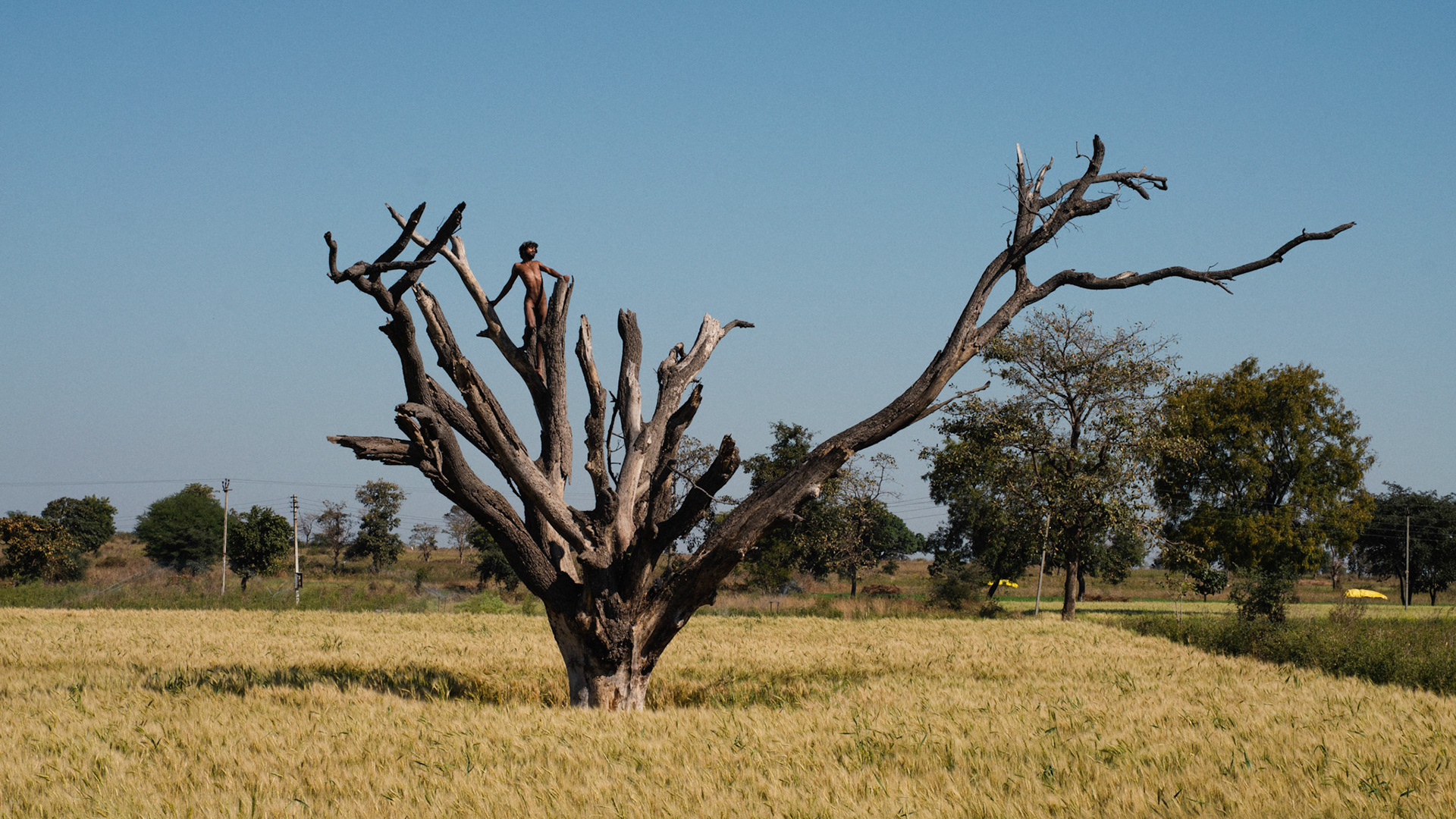
Later, Mayur and I drove from Pune to Nagpur.
Thirteen hours turned into nine.
We were flying on the highway.
Then an image appeared before it existed.
A tree.
A form already waiting.
I asked the car to stop.
And ran.
Barefoot into the field,
thorns and stones cutting into skin.
But I had already seen the shot.
I climbed.
Naked, scratched, shaking.
And then something happened.
I blended.
With the branch.
With the tree.
With the earth.
Some cars slowed down.
Some stared.
But I was invisible.
Because I was the tree.
I was natural.
I no longer stood against form.
I became part of it.
There is a tree on Table Land in Panchgani.
Alone.
Locals call it One Tree.
It stands like a quiet rebel,
fighting fierce winds on a lonely plateau.
As a teenager, this was an escape.
My friends and I, during junior college,
would bunk class, climb here,
and disappear into the caves nearby.
Those hidden spots were our secret world,
our sesh spots, our hideouts, our silence.
Years passed.
The memory blurred
into the rush of adult life.
Then one day, I returned.
With my bachelor friends,
Jatin and Aman.
I showed them every corner,
where we used to sit, laugh, vanish.
The tree had changed.
More hollow. More exposed.
But still there.
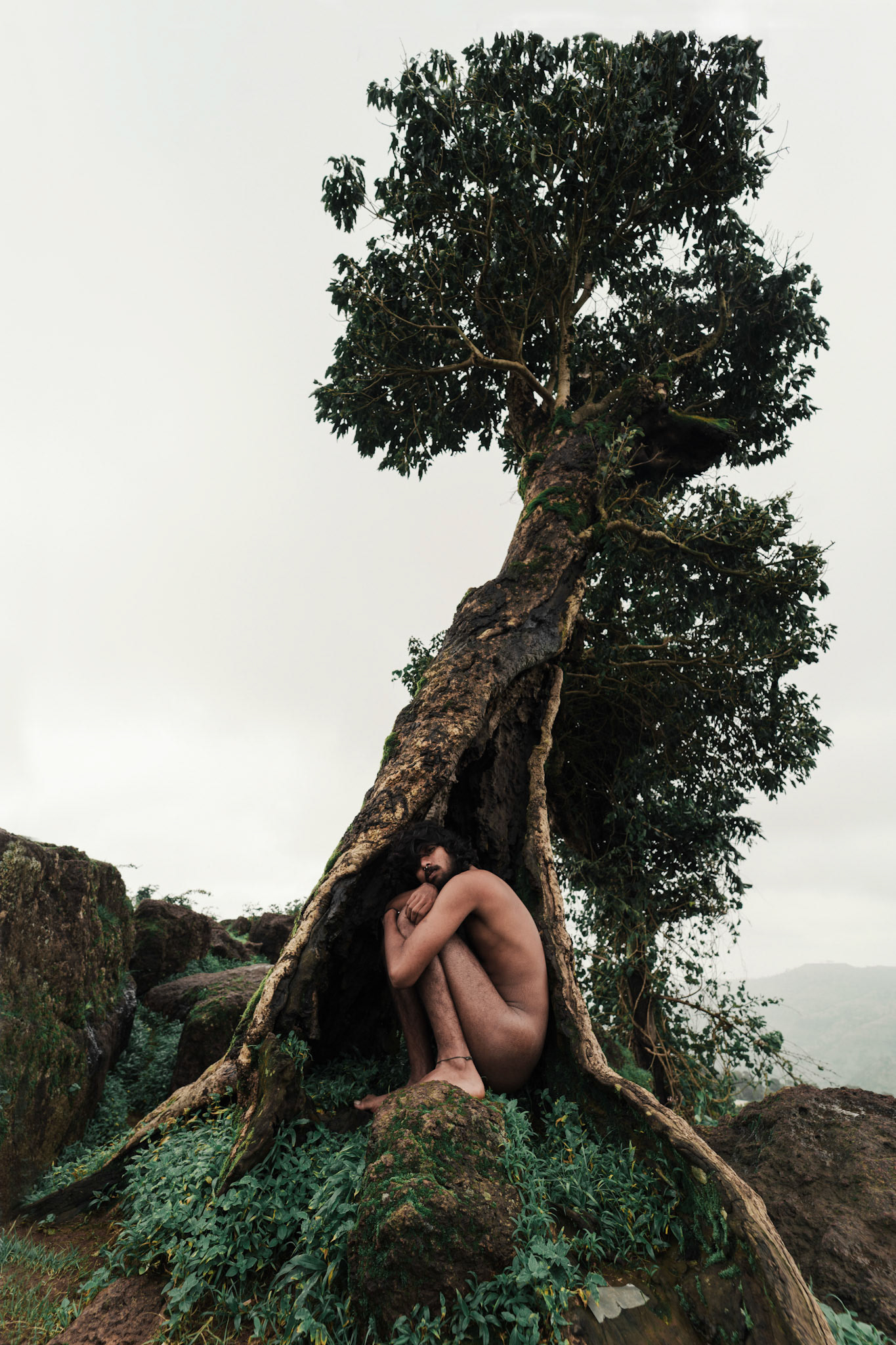
Something pulled me to it.
I stepped into its body.
Folded myself inside its hollow.
And for a moment,
I wasn’t photographing the tree.
I was the tree.
I was the kid
who once found freedom here.
I was the man
now seeking shelter inside something
that had quietly endured the world.
It was not just a photograph.
It was memory.
A rebirth.
A moment of becoming one
with the place that raised me in silence.
I stepped beyond the lone tree
on Panchgani’s Table Land.
This place had known me
before the work did.
I lived here during my junior college years.
Even then,
the land felt larger than geography.
It carried its own myth.
During the monsoon, fog would swallow the plateau.
We would walk into it in pairs or small groups,
knowing we would lose one another inside the white distance.
And somehow, each of us always found a way back,
returning from different paths,
different edges,
different directions.
There was something beautiful in that trust.
One could disappear
and still return.
Seasonal ponds appeared there during the rains.
Temporary. Quiet. Reflective.
They were more than water.
They became markers in an erased landscape.
Guides inside uncertainty.
Anchors in the mist.
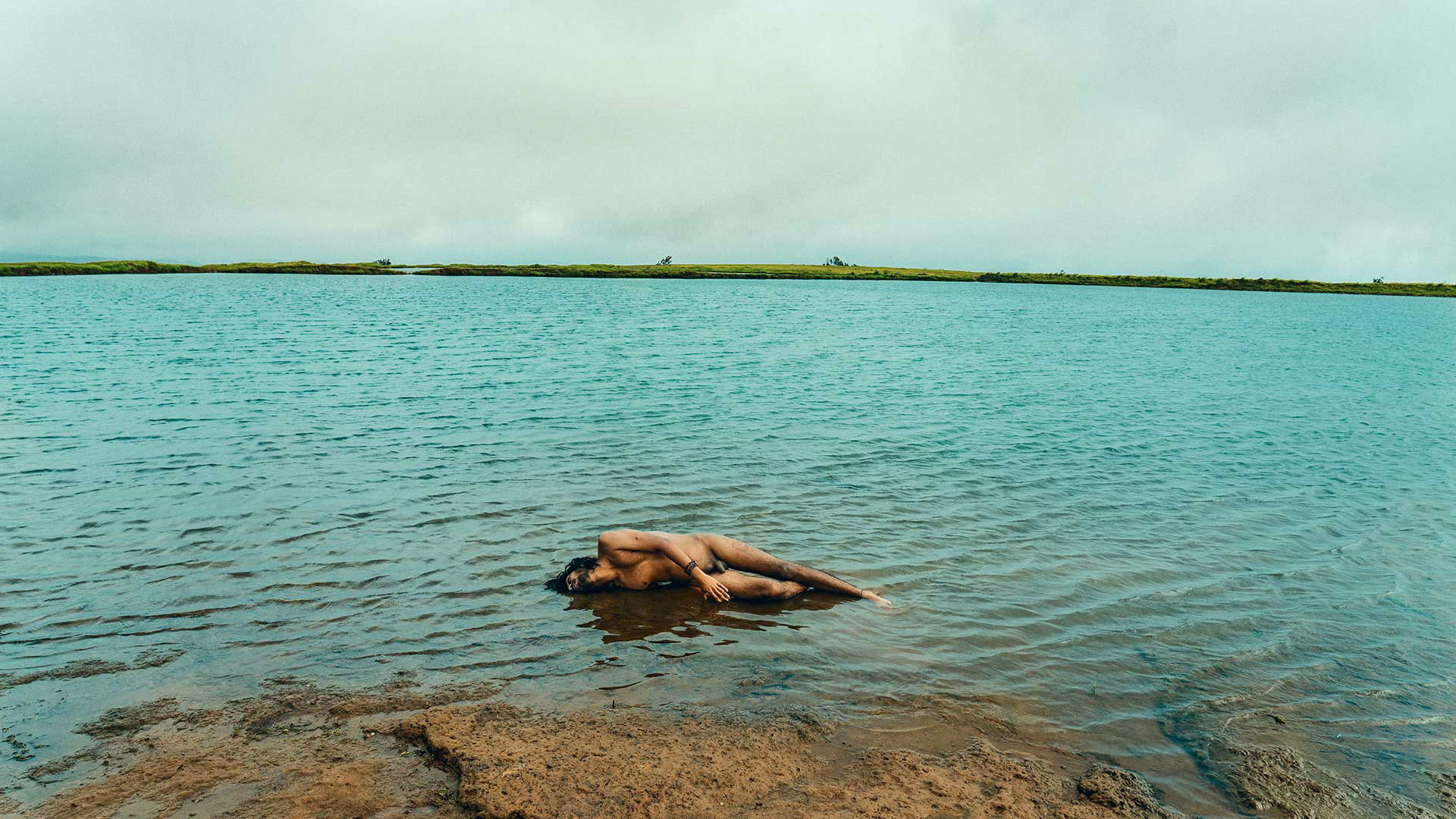
Much had changed.
The land had not.
The fog still arrived without warning.
The ponds still formed
like memories returning on their own.
I stepped into one of them.
Bare. Still.
Time did not separate itself.
The boy who once got lost there
and the body standing there now
occupied the same place.
Not everything that disappears
is lost.
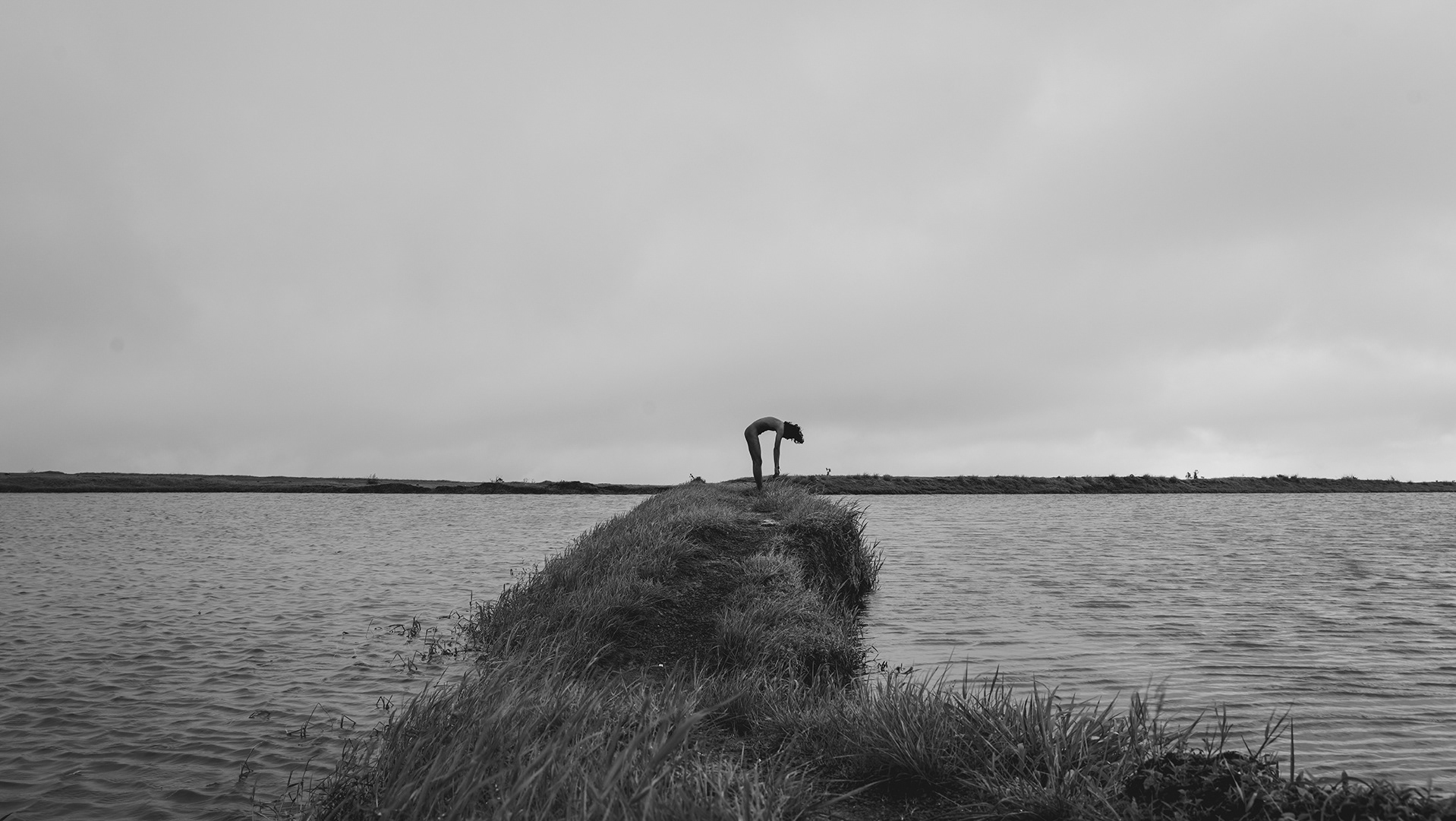
Bare Trip moved through heat, cold, fog, stone, and water.
But it was never about climate.
Each image was a return.
To the soil.
To the storm.
To the self.
To the storm.
To the self.
To be bare is not exposure.
It is the end of distance.
Bare Trip
2019 - Present
© Akshay Mali, 2022